By The Solo Gent
Your first solo camping trip is a chance to set your own pace. You can choose the campsite, walk as far or as little as you like, cook when you’re hungry and spend a quiet evening outdoors. The freedom is appealing, but packing for one can feel surprisingly difficult. When you’re going alone, there’s no one beside you who happens to have the tent pegs, spare torch or tin opener you forgot.
The good news is that you do not need an enormous collection of specialist equipment. For a first trip, the aim is to stay sheltered, warm, dry, fed and comfortable. Start with one or two nights at an established campsite, ideally somewhere with toilets and drinking water. That gives you room to learn how your kit works without having to carry everything you need into a remote location.
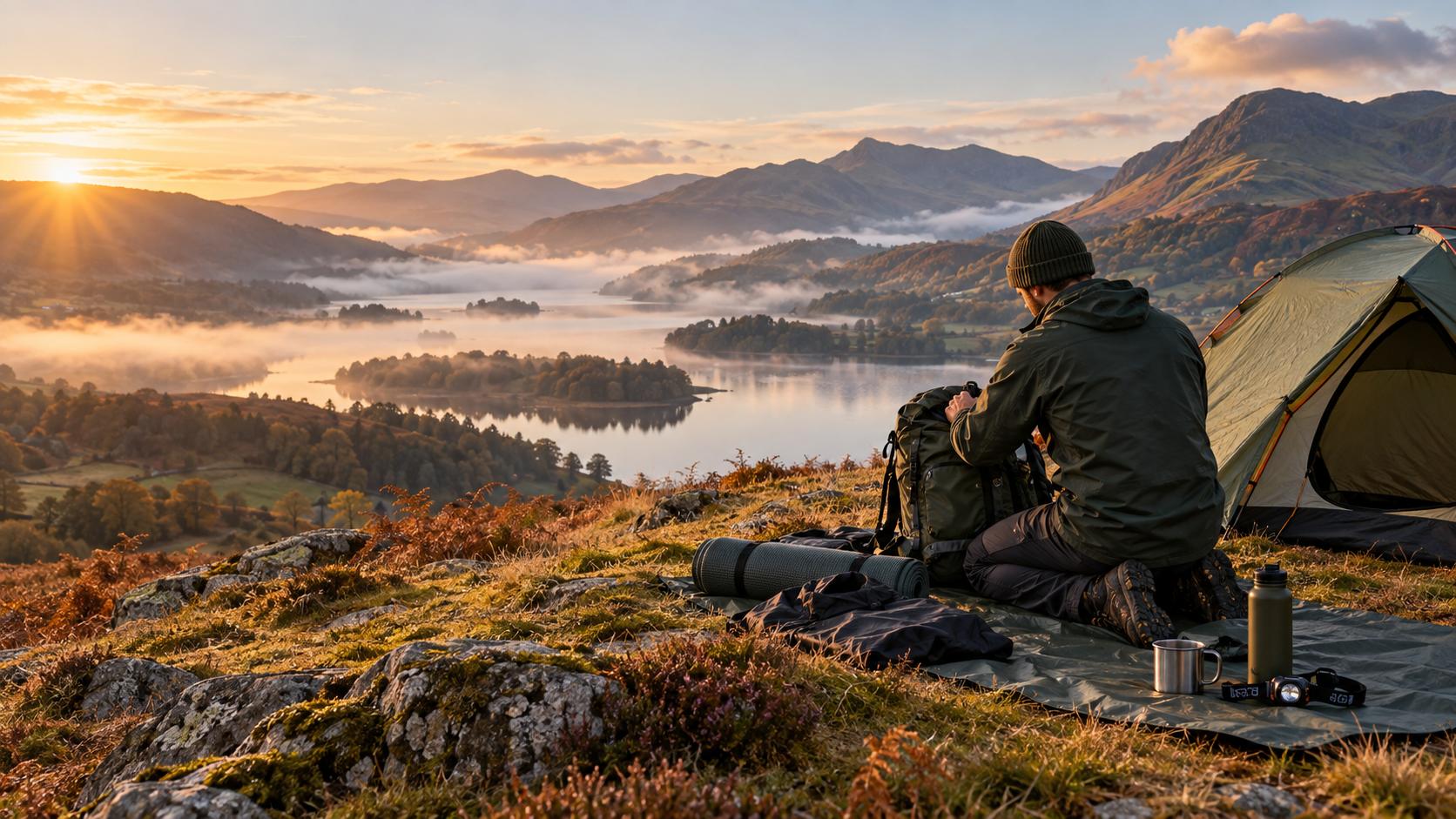
This guide covers what to pack for a first solo camping trip in the UK, from the essential sleeping setup to the small items that are easy to overlook. Think of it as a starting point rather than a rule that every camper must follow. Your list will change with the season, the weather, the campsite facilities and how you’re travelling.
Before putting anything in a bag, picture the trip from arrival to departure. Are you driving directly to your pitch, or carrying your gear from a train station? Does the campsite provide showers, washing-up facilities and a place to refill water? Are you planning to cook every meal, or would you rather bring simple food and eat locally? The answers matter more than any generic packing list.
For a first solo trip, a booked campsite is a straightforward choice. Check its arrival time, pitch rules, fire policy and available facilities before you leave. Save the booking confirmation somewhere you can access without a signal. If you plan to camp outside an established site on a later trip, check the local access rules first; permission to walk across land does not automatically mean permission to pitch a tent there.
Check the forecast close to departure, including the overnight temperature, wind and rain. A pleasant afternoon can become a cold night, and a tent that feels easy to pitch in the garden can be more awkward in strong wind. The Met Office recommends checking an accurate forecast and preparing for changing conditions when camping. If the weather looks beyond your experience or your equipment, changing the plan is a sensible decision. Met Office
Your tent is the centre of your setup, so choose one you can put up without help. A one-person tent saves space and weight, while a two-person tent often gives a solo camper more room for bags, boots and a comfortable night inside. Neither is automatically better. If you’re travelling by car, extra living space may matter more than packed size. If you’re walking to your pitch, weight and bulk become much more noticeable.
Before the trip, pitch the tent at home or somewhere you’re allowed to practise. Identify the inner tent, flysheet, poles, pegs and guy lines. Check that every part is present and that you understand the order of assembly. Trying it once in daylight can save a frustrating first evening at the campsite. Pack the tent instructions if you might need them, and make sure the peg bag goes back into the tent bag when you finish practising.
Consider the ground as well as the weather above you. A suitable footprint or groundsheet can help protect the tent floor, but check the tent maker’s guidance and avoid leaving a footprint sticking out where it could collect rainwater. At the campsite, choose a permitted pitch that is reasonably level and clear of sharp objects. Leave yourself enough daylight to put the tent up, organise your gear and find the facilities before it gets dark.
A tent keeps the weather off, but it does not make the ground warm or soft. For a comfortable night, pack a sleeping bag, a sleeping mat and a pillow or something you can use as one. New campers sometimes focus on the sleeping bag and forget the mat. The mat adds comfort and helps reduce heat loss to the ground. Mountaineering Scotland includes it among the basic camping necessities alongside shelter, cooking equipment, water storage and a torch. Mountaineering Scotland
Choose your sleeping bag for the temperatures you expect at night, not just the season printed on the packaging. Compare its stated temperature information with the forecast and remember that people feel the cold differently. If you already own a bag and are unsure how warm it is, a mild first trip at a campsite is a better test than a cold night far from home. Pack dry sleepwear and a spare pair of socks so you can change out of damp daytime clothes before bed.
A foam mat is simple and resistant to punctures. An inflatable mat is often more comfortable and packs smaller, though it needs care and, depending on the model, a pump or repair kit. If you’re driving, you can prioritise comfort and bring a fuller pillow. If you’re carrying everything, a compact pillow or clothing packed into a soft bag may be enough. Sleep is a practical part of the trip: a good night makes the next day far more enjoyable.
For UK camping, layers are more useful than relying on one bulky item. Pack a comfortable base layer, a warm middle layer and a waterproof outer layer. Even if you expect sunshine, take a waterproof jacket. A light jumper or fleece can make a cool evening pleasant, while a hat can be useful when the temperature drops after sunset.
Bring clothes that suit what you’ll actually do. If you’re spending the day walking, take footwear you’ve already worn enough to trust, along with socks that work well in it. If you’re staying near the pitch, comfortable shoes and a separate pair to change into can be enough. Avoid making a new pair of boots or unfamiliar technical clothing part of your first big test outdoors.
Pack spare underwear, socks and a clean top for the morning. Keep at least one dry set protected inside your bag, especially if rain is expected. A small bag for damp or dirty clothing helps keep the rest of your kit usable. You probably do not need a fresh outfit for every possible situation, but dry socks and warm sleepwear are worth the space.
Food can be one of the pleasures of solo camping, but your first night does not need a complicated camp kitchen. Plan each meal before you leave. A simple breakfast, an easy lunch and one evening meal will tell you exactly what food and equipment to pack. Include a few snacks that you can eat without cooking in case you arrive late or decide you’d rather relax than prepare a full meal.
If you want hot food, check that your campsite permits your chosen stove and learn how to use it before travelling. Pack the stove, compatible fuel, a pan or pot, a mug, utensils and a lighter or other suitable ignition method if required. Think through the meal itself: if you’re bringing a tin, can you open it? If you’re making tea, do you have enough water? If the food needs refrigeration, do you have a way to keep it at a safe temperature?
Never use a camping stove, barbecue or other fuel-burning appliance inside your tent. Fire and carbon monoxide are serious hazards, including when the appliance appears to have cooled. Cook in an appropriate outdoor area and follow the campsite’s rules. The Camping and Caravanning Club advises against using gas, charcoal, liquid or solid fuel appliances inside tents and awnings. The Camping and Caravanning Club
If cooking sounds like too much for a first attempt, it is fine to keep things simpler. Choose a campsite near a shop or café, take ready-to-eat food where suitable, and pack a mug and water bottle. Your first trip is about learning what you enjoy. You can build a more complete cooking setup later.
Bring a reusable water bottle and fill it before setting off. Check whether the campsite has drinking water taps and how far they are from your pitch. If you are driving, an additional water container can make cooking and washing up easier. If you are walking in, plan how much you can comfortably carry and where you can reliably refill it.
Do not assume that every tap, stream or lake is safe to drink from. Use clearly designated drinking water points, or prepare an appropriate treatment method if your trip genuinely requires one. For a first stay at an established campsite, using its potable water supply keeps the plan simple. Keep some water accessible while travelling so you are not searching through your packed gear when you stop.
A phone torch is useful, but it should not be your only light. Pack a head torch or another reliable battery-powered light, then check it works before leaving. A head torch frees both hands for tent adjustments, washing up and finding things in your bag after sunset. Spare batteries or a way to recharge it may be useful depending on the model and the length of your stay.
Set your light somewhere you can find it before darkness falls. Many small camping annoyances happen because essential items are buried at the bottom of a bag. Put your torch, warm layer and wash kit in predictable places. When you wake in the night and need to find the toilet block, you’ll be glad you did.
A power bank is useful for keeping your phone charged, particularly if you use it for directions, campsite details or photographs. Charge both the phone and power bank before departure, and bring the correct cable. Electrical hook-up pitches are available at some campsites, but you need to check what is provided and use equipment suitable for that setup.
A basic wash kit should include a toothbrush, toothpaste, soap or wash product, a towel, toilet paper or tissues for backup, and any personal care items you use daily. Add sun protection for exposed days and insect repellent when conditions call for it. If the campsite has showers, check whether you’ll want shower footwear and a bag to carry your wash kit there.
Bring your regular medication in the amount you need for the trip, plus a little margin for a delayed return where appropriate. A small first aid kit can cover minor cuts, blisters and headaches. You do not need to carry a large medical bag for a short campsite stay, but it helps to know where your essentials are. Pack any emergency medication where it is easy to reach.
Keep a few practical repair items together: spare tent pegs, a little strong tape suitable for temporary fixes, and a repair patch if your mat or tent came with one. A small rubbish bag is useful for waste and for isolating wet items. These objects take little room and can rescue an otherwise irritating situation.
Solo camping offers independence, but it also means making your own small decisions when plans change. Before leaving, tell someone you trust where you’re staying and when you expect to return. Save the campsite address, booking details and a contact number. Download any maps or directions you may need, since mobile reception can be unreliable in rural areas. Ordnance Survey recommends planning ahead and taking appropriate navigation equipment when heading outdoors. OS
For your first trip, you can make the experience easier by arriving well before dark and choosing a site within a comfortable distance of home. Walk around once you’ve pitched up: find the toilets, water point, washing-up area and campsite entrance. A little familiarity can make a new place feel much more settled after sunset.
Take something you genuinely enjoy for the quiet hours. A book, notebook, camera or downloaded music can make a solo evening feel intentional. You do not have to fill every minute with an activity, though. Sitting with a warm drink and having nowhere else to be may become your favourite part of the trip.
How you travel should shape how much you bring. A car camper can carry a chair, a larger sleeping mat and a few extra comforts without much difficulty. If you’re arriving by train or walking to your pitch, every item needs to earn its place in your bag. Try lifting and carrying the fully packed bag at home. If it feels awkward after five minutes, reconsider the nonessentials before departure.
Organise your gear into a few groups: shelter, sleep, clothing, food, hygiene and items you need quickly. Waterproof bags or liners can help protect spare clothes and your sleeping bag. Keep your booking information, phone, wallet, keys, water and rain jacket accessible. Packing neatly matters more when you’re alone because you will be the person finding everything.
A simple final check before you close the door can prevent the most common mistakes. Confirm that you have the complete tent, sleeping bag, mat, suitable clothes, water bottle, food plan, light, phone and charging cable, medication, campsite details and a way to pay. Check the forecast once more. Then leave some space in your plans for the unexpected pleasures of the trip.
Pack a rubbish bag and take all your waste away or use the campsite’s designated bins. Follow its rules for fires, washing up and disposing of wastewater. The Countryside Code for England and Wales asks visitors to take litter home and leave no trace of their visit. Those habits help keep campsites and the surrounding landscape enjoyable for the next person, too. GOV.UK
In the morning, give yourself enough time to pack without rushing. Shake moisture from the tent where possible, check the ground for forgotten pegs and look around the pitch before you leave. If you have to pack a damp tent, unpack and dry it thoroughly once you’re home, following the manufacturer’s care instructions. This small job helps keep your gear ready for the next outing.
Your first solo camping trip does not have to be flawless to be worthwhile. You may discover that you packed too many clothes, wished you’d brought a better pillow or loved the quiet more than you expected. Each trip teaches you what deserves a place in your bag. Start with the essentials, choose a manageable destination and let your own version of camping develop from there.
The Solo Gent: Go your own way. Gear up for the journey.

I’m the voice behind The Solo Gent, sharing my interest in solo adventures, camping and the freedom to explore at my own pace.
This blog is a place for practical ideas and honest inspiration. I write about planning trips, choosing gear and finding worthwhile adventures both close to home and farther afield. You don’t need to be an expert or travel for weeks to begin—sometimes a single night camping or a new walking route is enough.
If you’re ready to make the journey your own, welcome to The Solo Gent.