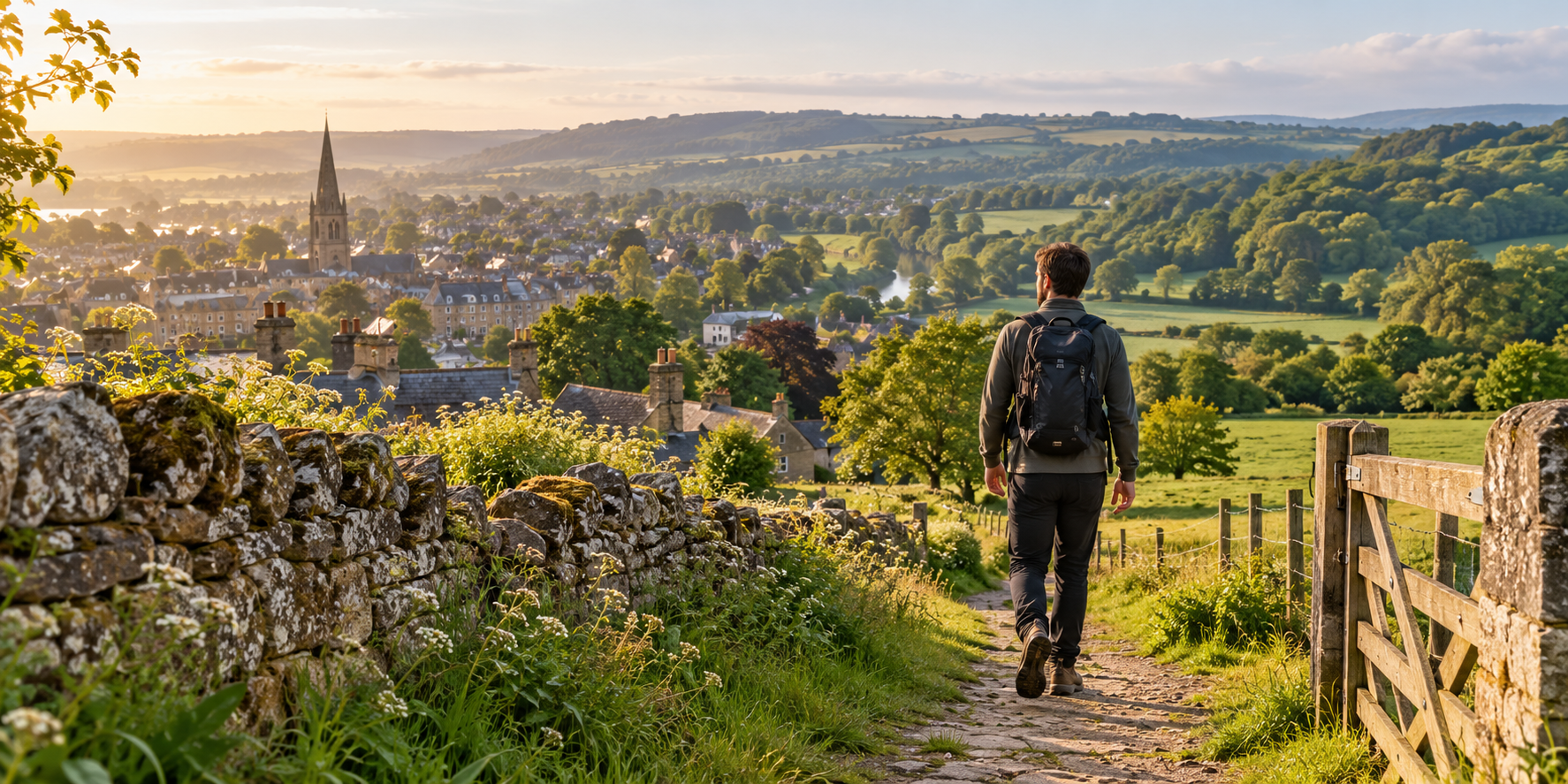
It is tempting to imagine that an adventure only counts when it involves a distant destination, a complicated itinerary or a long stretch away from normal life. Yet there may be trails, parks, coastlines, waterways or unfamiliar neighbourhoods within a short journey of your front door. Exploring nearby places can be affordable and easier to fit around work and other commitments. It also gives you a chance to practise planning and travelling independently before a bigger trip.
Begin with a map rather than a long list of famous attractions. Look for green spaces, public paths, viewpoints, museums, historic streets or stations on a line you rarely use. Choose one place that makes you curious. A manageable outing might mean a two hour walk, a morning in a nearby town or an afternoon cycling a familiar route in the opposite direction. The distance matters less than making a deliberate choice to see your surroundings differently.
Set a realistic amount of time. If you have only half a day, choose a destination that will leave room to explore once you arrive. A route that uses almost all your time getting there can turn a pleasant outing into a rush. Check travel schedules, opening times and any access information before leaving. If you are walking, look at distance, terrain and likely conditions rather than relying on a single estimated completion time.
Local walking routes can offer surprising variety. A riverside path may connect to a woodland loop; an urban park may lead to a historic street or a café you have never visited. Use a reputable map and understand whether the route follows public access. Paths can be muddy, steep or uneven even when they are close to homes. Footwear, weather protection and water should suit the actual route, not just its distance from your house.
Give the outing a small purpose if that helps you begin. Photograph five details that catch your eye. Find the best view of a local landmark. Visit a market and choose something for lunch. Walk to a new café by a route you have not taken before. A simple goal gives shape to the day without demanding a packed schedule. Once you are out, you may discover a different direction worth following.
Travelling alone is particularly well suited to local exploration. You can stop to read a sign, spend longer by the water or shorten the trip when you feel like going home. There is no need to negotiate the plan with anyone else. That freedom can feel unusual at first, so try keeping a loose route and one planned stop. You will have enough structure to feel oriented and enough flexibility to enjoy the unexpected.
Look at the forecast and the amount of daylight before setting off. For a short urban outing, a coat and charged phone may be enough. For a longer walk, bring water, food, an appropriate map, weather protection and a light if there is any chance you will return near dusk. Tell someone your plan if you are heading into a less familiar or quieter area. Preparation should be proportional to the outing, but nearby does not automatically mean risk free.
Public transport can turn a familiar area into a new journey. Take a train or bus to one stop and walk towards another, or travel out and return by a different route. Check the last service and allow room for delays. If you drive, consider a loop so you can return to the same parking area. A point to point route can be satisfying, but its transport connections need to work in both directions.
Another option is to revisit a place at a different time of year. A woodland path changes as leaves grow, turn colour and fall. A beach has a different character on a quiet autumn morning than it does on a warm summer afternoon. Revisiting can help you notice wildlife, light and small changes that a one time visit might miss. It also removes some planning work because you already understand how to get there.
You can build a series of small adventures around a theme. Explore one new public path each month, visit the green spaces along a railway line or learn more about local history through short walks. A theme makes it easier to choose the next destination when a free Saturday appears. Keep the idea enjoyable rather than turning it into a target you must complete. The value comes from getting out and paying attention.
Packing lightly can support a spontaneous trip. Keep a simple day bag ready with a reusable water bottle, a small snack, a power bank and any items you regularly need. Add clothing and route specific equipment before leaving. Having the basics together lowers the effort of deciding to go. It is also worth keeping a short list of places you would like to visit, so you do not spend your whole free morning choosing one.
If you are trying outdoor activities for the first time, a local setting lets you learn gradually. Test how your footwear feels on a longer walk. Practise using an offline map. Discover what you enjoy carrying and what you would leave behind. You can also learn when you prefer to set out and how much distance feels comfortable. Those lessons make planning a weekend trip or solo camping stay more grounded in experience.
Not every outing will produce an impressive photograph or an exciting story. Some days will be rainy, a café will be closed or a route will be less interesting than expected. That is fine. Turn back, change the plan or notice something else nearby. Flexibility is a useful adventure skill, and a modest day out is a low pressure way to practise it.
Afterwards, keep a note of where you went and what you liked. Save a route, mark a place to revisit or share a recommendation with a friend. Over time, these outings can change how you think about home. Instead of treating adventure as something that begins only when you go far away, you start to see opportunities in the gaps between familiar places. The next one might be close enough to begin tomorrow.
An adventure close to home can also support local businesses and places. Buy lunch from an independent café, visit a community museum or use a local campsite for a trial overnight stay. Check opening information first, particularly outside peak season. These stops can give an outing a natural destination and introduce you to people who know the area well. A short conversation may lead to a path or viewpoint you would not have found in a search result.
If you want company without giving up your independence, choose a local event as the centre of the day. A guided nature walk, open garden, heritage event or outdoor activity session can provide a starting point. You can travel there alone, take part for a set time and continue exploring afterwards. This can be a comfortable bridge between fully solo travel and more social activities, especially when you are building confidence.
Accessibility matters when you choose a route for yourself or recommend it to someone else. Check surface, gradients, steps, rest points and transport connections where those details affect your plans. A route described as easy may still include a muddy section or a steep entrance. Local knowledge can help, but conditions change after rain or maintenance work. Treat route descriptions as information to confirm, not a guarantee that every visitor will have the same experience.
It can be satisfying to make a familiar day feel like a short holiday. Set aside a few hours without errands, dress for being outdoors and pack a meal you are looking forward to. Put your phone away for part of the walk if it is safe to do so, then take it out when you need navigation. The change in attention may be more meaningful than a change in postcode. You may notice that a place you thought you knew has far more detail than your usual journey allows.
As your confidence grows, combine several local outings into a weekend. Walk one route on Saturday, camp at a suitable site or stay nearby, then explore a second place on Sunday. Because the area is familiar, the extra challenge is manageable. You can test your camping gear, learn how you like to pace a trip and return home without a complicated travel day. A larger adventure can begin as two small ones joined together.
Try sharing what you discover without feeling pressure to turn every outing into content. Recommend a useful route to a friend, leave an accurate review of a place or keep a private journal. Record practical details such as transport, facilities and how long the walk took you. These notes help you plan a return visit and can make future recommendations more useful than a photograph alone.
Even a small change of route can make a familiar place feel new.

I’m the voice behind The Solo Gent, sharing my interest in solo adventures, camping and the freedom to explore at my own pace.
This blog is a place for practical ideas and honest inspiration. I write about planning trips, choosing gear and finding worthwhile adventures both close to home and farther afield. You don’t need to be an expert or travel for weeks to begin—sometimes a single night camping or a new walking route is enough.
If you’re ready to make the journey your own, welcome to The Solo Gent.