Camping equipment can be confusing when you first start shopping. Product pages list weights, capacities, fabrics and temperature figures, while photographs show ideal conditions that may not match your plans. Rather than beginning with a catalogue, begin with a trip. Where will you sleep, how will you travel, how long will you stay and what conditions can you reasonably expect? Those answers give you a better way to decide which features matter.
Consider transport first. If you will carry everything on your back, packed size and weight will affect every step. A comfortable looking item may be less appealing after several miles. If you will park next to a campsite pitch, you may choose a larger tent, more comfortable sleep setup and a few conveniences. Neither style is inherently better. Gear should make the trip you want to take easier, rather than meeting someone else’s idea of a perfect kit.
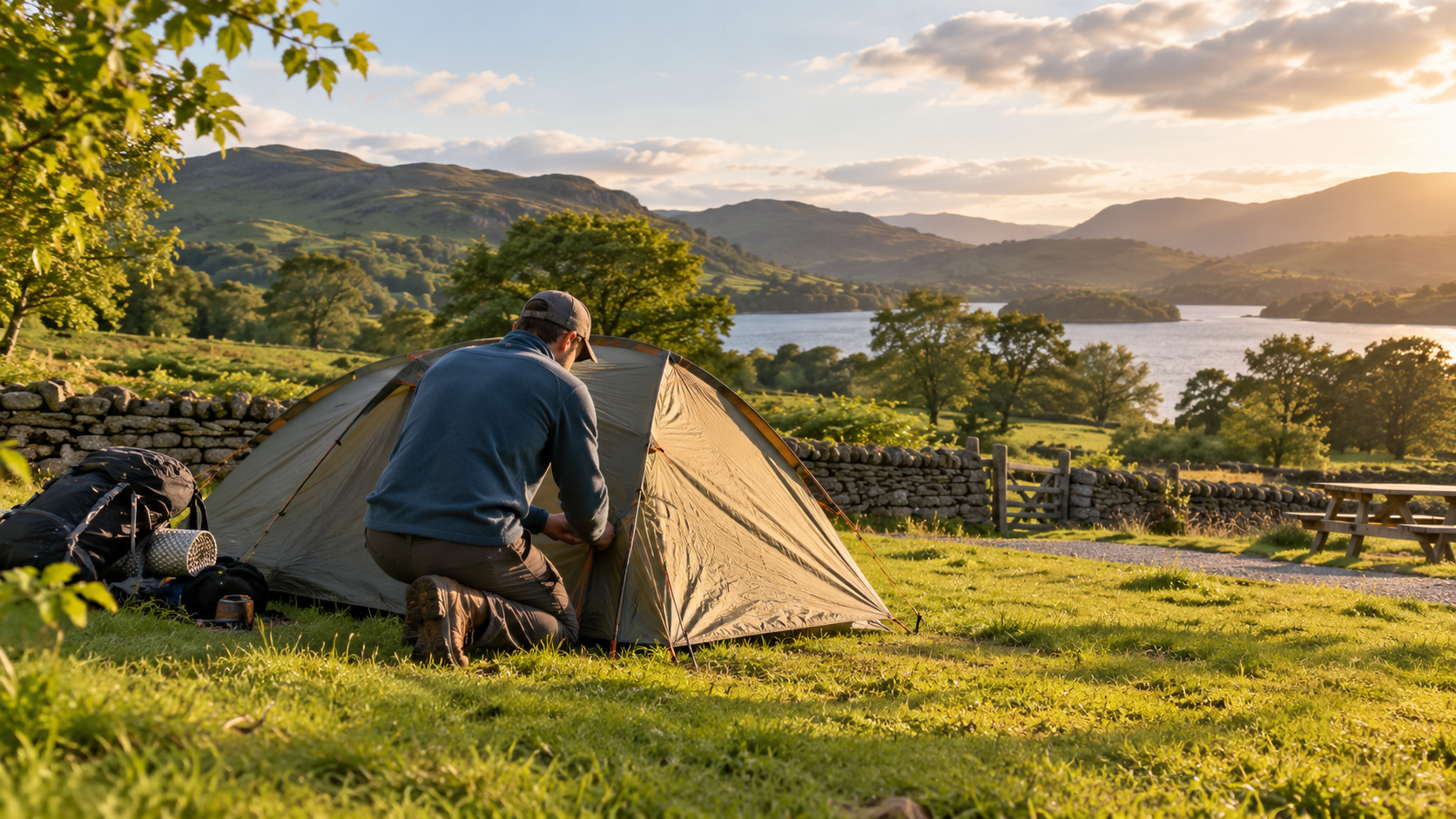
Your tent is often the largest decision. Check its stated capacity, floor dimensions and peak height. A one person tent may have little room for a bag, while a larger tent may be harder to carry. Think about how you will enter and exit, where wet shoes can go and whether there is a sheltered area for gear. Read how the tent is pitched and whether its components are all included. A quick practice pitch at home can reveal more than a product photo.
The weather protection of a tent depends on its design and correct use, not just one number in a description. Check the intended season, ventilation, seams, outer layer and ground protection. Follow the manufacturer’s instructions for pitching and care. A tent that suits a sheltered summer campsite may not be the right choice for an exposed, windy pitch. Match the equipment to realistic conditions and be prepared to change plans when the forecast goes beyond what you can manage.
Sleep equipment deserves the same attention. Sleeping bag labels may include different temperature ratings, so find out which figure describes comfortable use rather than assuming the lowest number is a pleasant sleeping temperature. Your own comfort varies with clothing, fatigue and the environment. A sleeping mat adds cushioning, but its insulation also matters. The warmest bag is less useful if the ground beneath you feels cold all night.
Try to think of tent, mat and sleeping bag as one setup. Make sure the mat fits the available floor space and that you have enough room to sleep comfortably. If you tend to move in your sleep, check a bag’s shape and dimensions. Test the full arrangement before a demanding trip if possible. A night close to home is a useful place to discover whether you need a warmer mat or a different pillow.
Food and cooking choices depend on your routine. Some campers enjoy preparing a meal after a walk; others prefer food requiring little effort. Choose equipment for the meals you are likely to make. Check the campsite’s cooking and fire rules, and use appliances only as directed. A stove should never be used inside an enclosed tent. Include the less glamorous items in the decision, such as fuel compatibility, cleaning supplies and how you will carry rubbish away.
Water is easy to underestimate because arrangements differ by site. Check whether drinking water is provided and where the tap is. For an outing away from camp, carry enough for the route and weather. A reusable bottle may be sufficient for a short walk; longer journeys can require a different plan. Do not assume a stream is safe to drink from without appropriate treatment and knowledge. Gear decisions should follow the actual water sources available on your trip.
Clothing is equipment too. A layering approach can help you adjust to activity and temperature: a comfortable base, an insulating layer and protection from wind or rain when needed. Choose footwear for the terrain and test it before a long outing. Useful features are the ones that serve your conditions, not necessarily the most technical terms on the label. Read sizing and care instructions carefully, especially when buying online.
For navigation, choose tools you know how to use. A phone with an offline map can be useful, but battery life and signal have limits. A paper map or other backup may be appropriate for a longer or more remote route, provided you understand it. Bring a light when your timing could extend towards dusk. Buying an elaborate device is no substitute for checking the route and knowing how to make safe decisions along the way.
Pay attention to product measurements. Weight may exclude accessories; a tent’s dimensions may be listed at its widest point; a packed item may not fit your bag as expected. Read specifications and customer guidance carefully where available. If a product has a size or fit requirement, measure your existing gear and your available storage space. A few minutes with a tape measure can prevent an unsuitable purchase.
There is no need to build a complete collection at once. Borrowing suitable equipment, using an item you already own or choosing a managed campsite can make a first trip more accessible. After each outing, identify the one change that would improve the next. Perhaps you need a better sleeping mat, a lighter bag or a head torch that is easier to use. Prioritising from experience helps you spend on the things that will actually matter.
Care and storage also affect value. Dry a damp tent before putting it away, follow washing guidance for technical clothing and check equipment for wear. Keep track of small components such as pegs and repair parts. Gear that is maintained and packed consistently is easier to trust when you set off. It can also save you from buying a replacement simply because something was stored wet or a part went missing.
Before comparing products, make a short list of what you already have. A jacket, bottle, day bag or warm layer may be perfectly suitable for the first trip. Check its condition and suitability rather than assuming every item needs an outdoor specific replacement. The money saved can go towards something more consequential, such as a comfortable sleep setup. Buying gradually also gives you time to understand what matters in practice.
If you see a discounted product, compare it against your needs rather than buying because the reduction looks attractive. Check the exact model, included parts, dimensions and return information. A bargain tent that is too heavy to carry or too small for your comfort is still the wrong tent. Consider how often you expect to use an item and where it will be stored between trips. A purchase is useful only if it fits your life as well as the journey.
Think about repairability and maintenance when choosing frequently used gear. Can a worn component be replaced? Are cleaning instructions clear? Is there a way to inspect the product before each trip? Even simple equipment benefits from basic care. A small repair kit appropriate to your shelter can be handy, but learn how to use it before you need it. Looking after existing gear is often more effective than constantly searching for a new version.
Make your choices in order of importance. First cover shelter, sleep, clothing, food, water, light and navigation for the specific trip. Then consider items that improve comfort or convenience. For one person, a compact chair may transform a campsite evening. For another, a lighter bag matters more. The order is personal, and it can change as your style of camping develops. There is no universal packing list that perfectly reflects every campsite and every traveller.
Shopping online requires a little extra care because you cannot handle the item. Read the specification more than once and compare measurements with equipment you own. Look for clear photographs showing how the product is used, and check whether accessories pictured are included. If a feature is unclear, ask before ordering. When it arrives, inspect it and practise at home in line with the seller’s return conditions. Finding a problem early is better than discovering it when you reach camp.
The best camping gear is not the largest collection or the most expensive product on a page. It is equipment suited to your destination, conditions, transport and preferred level of comfort. Start with a realistic trip, read the details, practise using the essentials and adjust your kit as you gain experience. The purpose of the gear is to support time outdoors. Let the adventure guide what you buy.
Before an upcoming journey, lay your chosen gear out together and check that the pieces work as a set. Does your sleeping mat fit your tent? Can you carry the full bag comfortably for the distance planned? Do you have a way to keep essential items dry? This final check can reveal a mismatch that individual product comparisons miss. It can also reassure you that the equipment you already own is enough for the trip you have planned.

I’m the voice behind The Solo Gent, sharing my interest in solo adventures, camping and the freedom to explore at my own pace.
This blog is a place for practical ideas and honest inspiration. I write about planning trips, choosing gear and finding worthwhile adventures both close to home and farther afield. You don’t need to be an expert or travel for weeks to begin—sometimes a single night camping or a new walking route is enough.
If you’re ready to make the journey your own, welcome to The Solo Gent.