There is a particular moment on a solo trip when you realise nobody else is making the decisions.
There is no friend choosing the route, no partner suggesting where to eat and no group deciding when it is time to leave.
You look around and understand that the day is entirely yours.
That feeling is one of the reasons every man should consider experiencing a solo adventure at least once.
It does not need to involve crossing a desert, climbing a mountain or travelling halfway around the world. A solo adventure could be a weekend camping in the British countryside, a coastal walking trip, a city break, a cycling weekend or simply taking a tent somewhere new.
The destination matters less than the experience of going alone.
Everyday life involves constant collaboration.
At work, decisions may involve colleagues or customers. At home, plans are often shaped around other people. Even holidays usually require negotiation.
Solo travel temporarily removes that structure.
Where will you stay?
What will you eat?
Which route will you take?
When will you stop?
Every answer is yours.
At first this can feel strange. Then it becomes liberating.
Making small decisions independently reminds you that you are perfectly capable of organising your own time.
Group travel naturally moves at a collective pace.
Someone walks faster. Someone needs a break. Someone wants lunch. Another person wants another photograph.
Travelling alone means your pace becomes the correct pace.
If you want to walk fifteen miles, you can.
If you find an incredible viewpoint after two miles and decide to stay there for an hour, nobody is waiting impatiently.
This changes how you experience a place.
Instead of constantly coordinating with others, you respond naturally to your surroundings.
Many people rarely spend meaningful time alone without distractions.
Even when physically alone, we fill the silence with television, social media, podcasts, messages and endless scrolling.
Solo adventure creates opportunities for actual quiet.
Walking through woodland without conversation gives your mind room to wander.
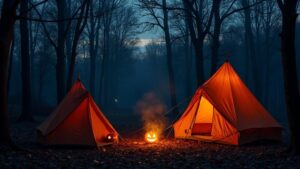
Sitting beside your tent after sunset without a television playing in the background feels remarkably different from an evening at home.
Initially, you may instinctively reach for your phone.
Eventually, you may stop wanting to.
Conversation naturally absorbs attention.
When travelling with friends, you can walk through spectacular scenery while discussing work, football or something somebody posted online.
Walk the same route alone and your awareness changes.
You notice birds.
You notice weather moving across distant hills.
You hear rivers before seeing them.
You notice old buildings, paths and small details that would normally disappear into the background.
Solo travel slows your attention even when your feet are moving quickly.
Camping is particularly good at teaching practical independence.
You pitch your own tent.
You organise your own equipment.
You cook your own meal.
You navigate.
You deal with rain.
You decide whether conditions are appropriate to continue.
None of these tasks needs to be extreme.
Their value comes from completing them yourself.
Each small success adds to the understanding that you can solve ordinary problems without immediately depending on somebody else.
You will probably make mistakes.
You might pack too much.
You may forget something.
Your chosen route might be less interesting than expected.
Perhaps you discover that your expensive new camping pillow is somehow less comfortable than a rolled-up jumper.
When travelling alone, mistakes become memorable lessons.
There is nobody else to blame and nobody else required to fix them.
You adapt.
Then the next trip becomes better.
Group holidays often involve doing things because everybody else wants to do them.
Solo travel strips that away.
Do you genuinely enjoy hiking?
Would you rather spend an afternoon photographing landscapes?
Do you love camping or would you prefer returning to a hotel after your walk?
Do you enjoy cities more than mountains?
There are no wrong answers.
Solo travel gives you the freedom to discover your preferences without social pressure.
Confidence is often misunderstood.
People imagine they need confidence before doing something alone.
Usually, confidence develops because they did it.
The first solo restaurant meal might feel awkward.
The fifth feels normal.
The first night alone in a tent might feel strange.
After several trips, pitching camp becomes routine.
Experience reduces uncertainty.
You do not have to transform into a fearless adventurer. You simply become more familiar with doing things independently.
This might be the biggest benefit of all.
How many trips never happen because schedules do not align?
One friend cannot get annual leave. Another is saving money. Someone else does not enjoy camping.
Months pass while everybody tries to find a weekend.
Solo travel provides another option.
You can still enjoy adventures with friends, partners and family. Travelling alone does not replace those experiences.
It simply means they are no longer your only option.
If nobody else is free, you can still go.
When everything depends on you, planning becomes more important.
You check accommodation.
You research transport.
You look at the weather.
You study your walking route.
You think about food and equipment.
These skills transfer beyond travel.
Good planning is essentially the ability to anticipate problems before they occur while leaving enough flexibility to respond when circumstances change.
Solo adventure provides an enjoyable environment in which to practise it.
Spending time alone can make social time more valuable.
After a quiet weekend outdoors, returning home and talking to friends can feel refreshing.
You begin to recognise the difference between choosing solitude and simply being isolated.
Healthy solo travel is not about rejecting other people.
It is about being comfortable enough in your own company that you do not need constant external entertainment.
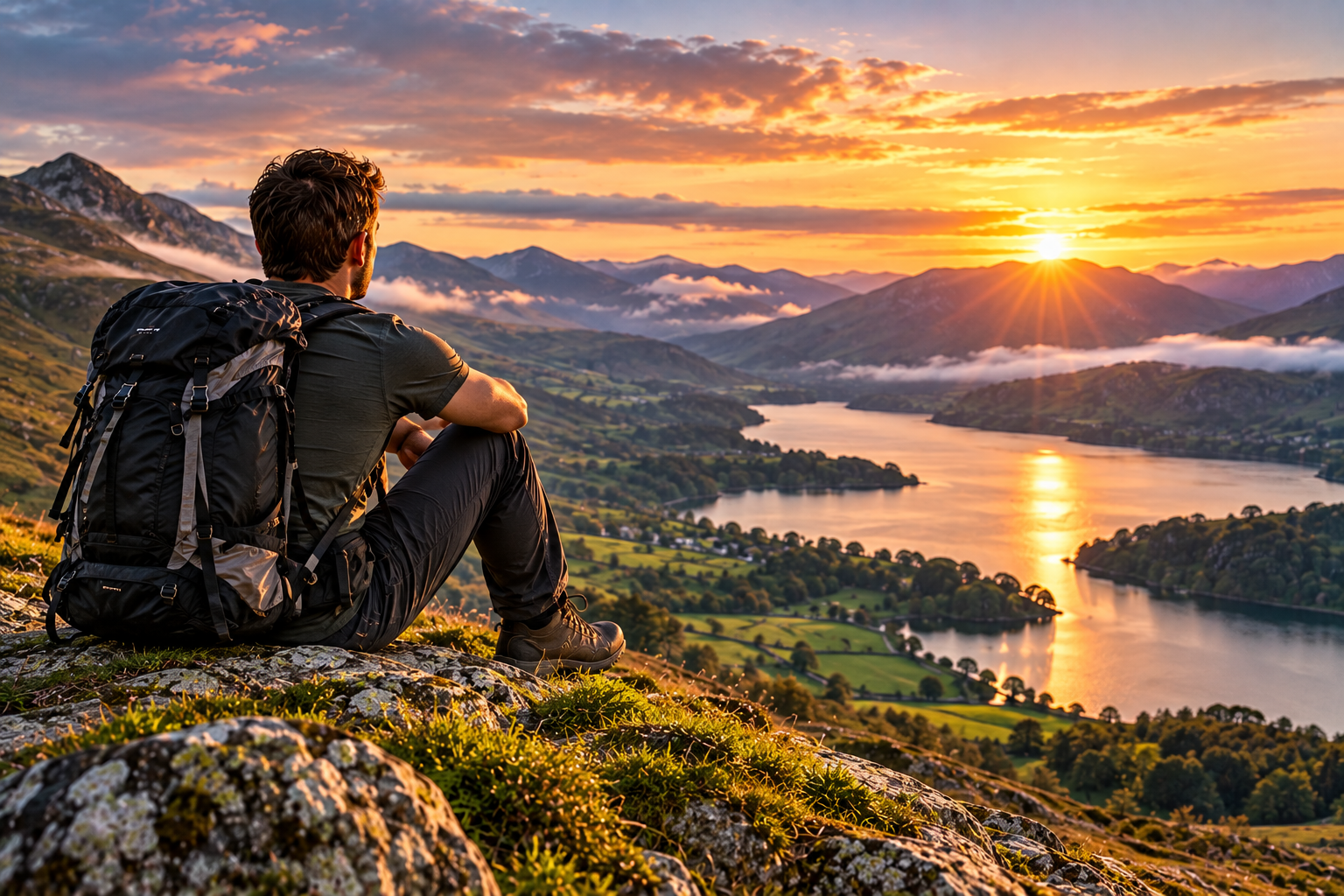
Standing on a viewpoint with twenty friends is fun.
Standing there alone can feel completely different.
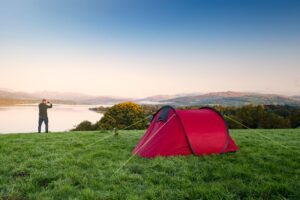
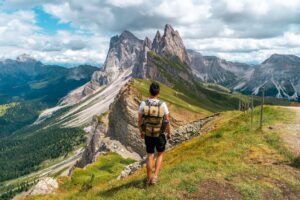
Without conversation, the scale of a landscape becomes more noticeable.
The wind sounds louder.
The distance looks greater.
The moment feels more personal.
This is one reason solo hiking and camping appeal to so many people. Nature becomes the main event rather than the background to a social gathering.
Imagine waking on Saturday morning and deciding you no longer want to follow your planned route.
When travelling alone, changing the plan requires a meeting involving exactly one person.
You can head towards the coast instead.
Stay another night.
Leave earlier.
Take a different trail.
Stop at a village that looks interesting.
That flexibility creates a type of freedom that organised group travel rarely provides.
One of the healthiest habits you can develop on a solo adventure is deliberately spending periods offline.
Use your phone for navigation and safety where necessary.
Take photographs.
Then put it away.
You do not need to broadcast every moment.
Some experiences can simply belong to you.
Watch the sunset rather than watching your screen record the sunset.
Sit outside your tent and listen.
Look around.
The internet will still exist tomorrow.
Solo adventure is sometimes presented online as an endless sequence of flights, luxury hotels and dramatic international destinations.
It does not have to look like that.
You can have a genuine adventure remarkably close to home.
Choose a campsite you have never visited.
Walk a section of coastline.
Explore a new county.
Take a train somewhere unfamiliar and spend the day walking.
The important ingredient is novelty, not expense.
If travelling alone feels intimidating, do not begin with a week-long wilderness expedition.
Take yourself on a day trip.
Then try one night away.
Book an established campsite.
Choose a straightforward walking route.
Build familiarity gradually.
There is no requirement to prove anything.
Adventure should expand your life rather than become a performance of toughness.
Independence does not mean ignoring danger.
Solo travellers need to think carefully about weather, navigation, communication and personal ability.
Tell somebody your plans when heading into the outdoors.
Keep your phone charged.
Carry suitable equipment.
Know when to turn around.
One of the most important signs of experience is being willing to change plans when conditions are wrong.
The mountain, trail or campsite will still exist another day.
Consider recording your adventures.
You do not need to become a travel influencer.
Keep photographs, write a short journal or mark destinations on a map.
Record what equipment worked, where you stayed and what you would do differently.
Over time, individual weekends become a collection of experiences.
You will be able to look back and see how far you have travelled, both geographically and personally.
Write down places you want to experience.
Keep the list realistic as well as ambitious.
Include local walks alongside national parks.
Add camping destinations, cities, coastal routes and activities you have never tried.
Whenever you have a free weekend, choose something.
This removes the familiar problem of wanting an adventure but spending Friday evening wondering where to go.
Your first solo adventure may not be perfect.
It might rain.
You might take the wrong jacket.
You may discover that the campsite is noisier than expected.
But perfection is not the objective.
The important moment is realising that you went.
You organised it.
You handled it.
You came home with a story that would not exist if you had stayed on the sofa waiting for somebody else to become available.
There is a difference between being alone and being independent.
Solo adventure teaches that difference.
It gives you space to think, opportunities to learn practical skills and the freedom to experience places at your own pace.
You do not have to become someone who travels alone every weekend.
You do not need to sell everything and live from a backpack.
Just try it once.
Choose somewhere.
Plan carefully.
Pack your bag.
Go for a walk, book the room or pitch the tent.
Then see what happens when the itinerary belongs entirely to you.
That is what The Solo Gent is about: independence, adventure, practical outdoor living and having the confidence to explore without always waiting for someone else to come along.
Your next adventure does not need a group chat.
Sometimes it just needs you.

I’m the voice behind The Solo Gent, sharing my interest in solo adventures, camping and the freedom to explore at my own pace.
This blog is a place for practical ideas and honest inspiration. I write about planning trips, choosing gear and finding worthwhile adventures both close to home and farther afield. You don’t need to be an expert or travel for weeks to begin—sometimes a single night camping or a new walking route is enough.
If you’re ready to make the journey your own, welcome to The Solo Gent.