
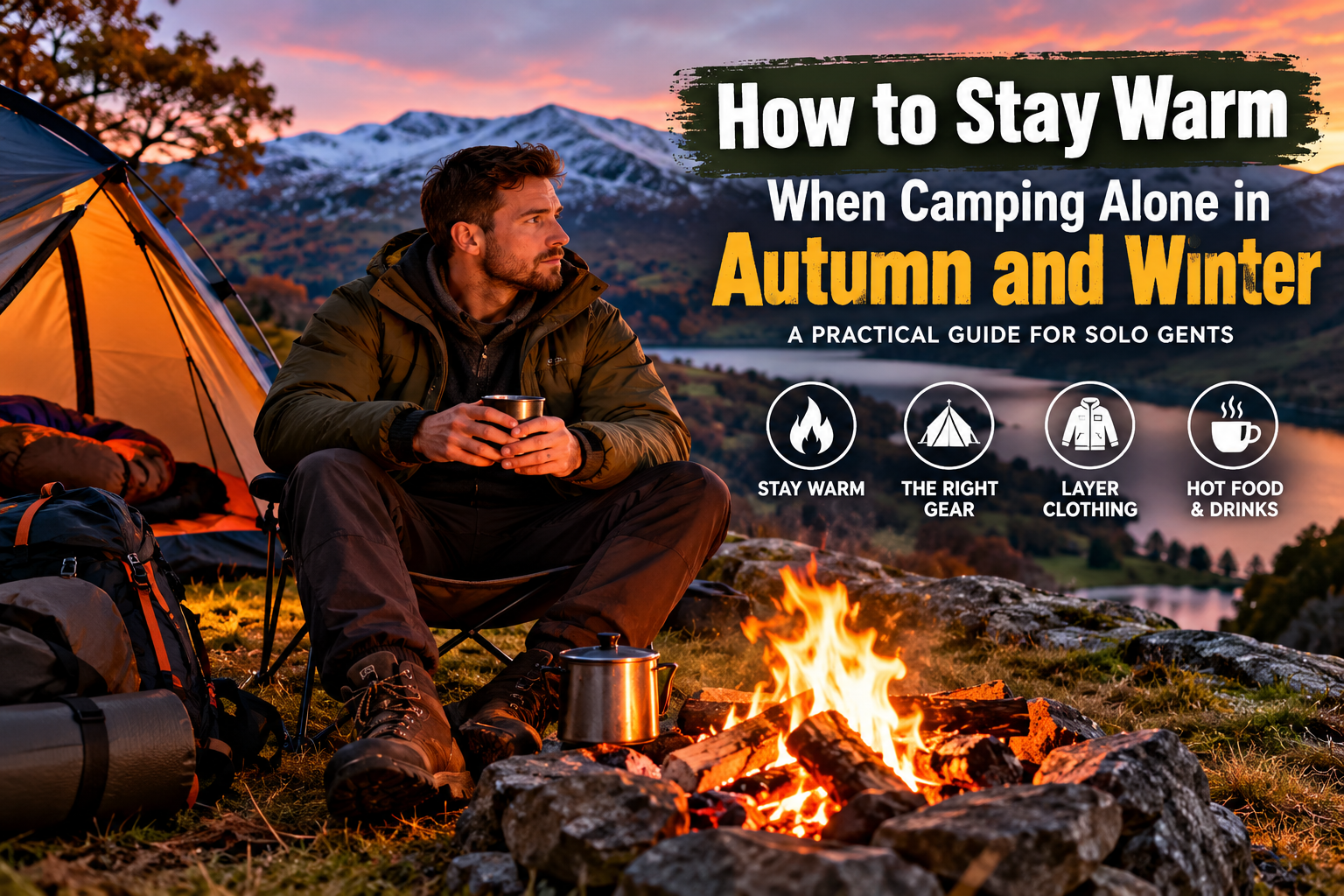
Camping alone can be one of the most rewarding ways to experience the outdoors. There is something special about pitching your tent in a peaceful location, making a hot drink as the sun disappears, and spending an evening away from everyday distractions. However, when autumn arrives and temperatures begin to fall, staying warm becomes one of the most important parts of planning a successful solo camping trip.
For the solo camper, cold weather deserves particular attention because there is nobody else in the tent to share body heat, notice the early signs that you are becoming too cold, or help if your equipment fails. Good preparation therefore matters. The aim is not simply to survive a chilly night but to create a comfortable camp where you can enjoy the season.
Autumn and winter camping in the UK can bring cold nights, rain, frost, strong winds and rapidly changing conditions. With the right tent, sleeping system, clothing and campsite routine, however, colder-weather camping can be an enjoyable experience.
This guide from The Solo Gent explains how to stay warmer when camping alone during autumn and winter, from choosing the right equipment to preparing hot meals and understanding when conditions are becoming unsafe.
Summer camping can be relatively forgiving. If the evening is warmer than expected, you can open the tent vents or use a lighter sleeping bag. During autumn and winter, mistakes can have more serious consequences.
Temperatures may fall considerably after sunset, while wind and moisture can make conditions feel colder still. Wet clothing is particularly problematic because moisture can accelerate heat loss. A sleeping bag that seems perfectly comfortable in September might also prove inadequate during a frosty November night.
This makes planning essential. Before leaving home, check the weather forecast for your destination and pay attention to overnight temperatures, wind, precipitation and weather warnings.
Remember that conditions in exposed countryside, valleys and higher ground can differ significantly from nearby towns. If the forecast looks beyond your equipment, experience or comfort level, change the location or postpone the trip.
Solo camping is about independence, not unnecessary risk.
Your tent is your first line of defence against the weather. It does not need to feel like a heated room, but it should provide reliable shelter from wind and rain while maintaining adequate ventilation.
For colder camping, choose a tent appropriate for the expected conditions. A good three-season tent may be suitable for many autumn trips at lower elevations, whereas genuine winter or mountain conditions can require specialist equipment and experience.
Size also matters. A huge tent can be harder to manage and may feel colder than a compact shelter. For a solo camper, a well-designed one- or two-person tent often provides enough room for sleeping and essential equipment without excessive unused space.
Look for a reliable waterproof flysheet, strong poles, secure guy lines and a good groundsheet.
Before heading away, practise pitching the tent at home. You do not want your first attempt to happen in darkness, rain and strong wind.
Where you pitch can influence how comfortable your night becomes.
Look for reasonably level, well-drained ground rather than the lowest point of a field where water and cold air may collect. Avoid obviously exposed locations if strong winds are expected.
Natural shelter can help, but never camp directly beneath unstable trees, dead branches or other hazards. In poor weather, falling branches can present a serious risk.
If you are using an established campsite, consider asking the site operator which pitches offer better protection during colder weather.
Try to arrive with enough daylight remaining to assess your surroundings properly. Setting up before sunset also gives you time to organise your sleeping system, prepare food and change into dry clothing before temperatures fall.
One of the most common cold-weather camping mistakes is concentrating entirely on the sleeping bag while overlooking the sleeping mat.
The ground can draw heat away from your body throughout the night. A suitable insulated sleeping mat creates an important thermal barrier between you and the ground.
Sleeping mats are often given an R-value, which indicates their resistance to heat loss. In general, a higher R-value means greater insulation, although the appropriate level depends on the conditions.
For colder trips, choose a sleeping mat designed for the temperatures you expect. Some campers combine compatible mats to increase insulation, but you should understand your equipment rather than simply assuming that adding another layer will solve every problem.
Never rely solely on a thick sleeping bag if you are lying on an inadequately insulated mat.
Your sleeping bag is one of the most important pieces of cold-weather camping equipment.
Do not choose one based solely on appearance or a vague description such as “winter sleeping bag.” Examine the manufacturer’s temperature ratings and understand what those figures mean.
Many sleeping bags distinguish between comfort, limit and extreme temperatures. The comfort rating is generally the most useful starting point when choosing a bag for a comfortable night’s sleep. An extreme rating should not be treated as a normal operating temperature.
Select a sleeping bag with a realistic margin for the temperatures you expect, taking your own tendency to sleep warm or cold into account.
Mummy-shaped sleeping bags are popular in colder conditions because their close-fitting design reduces unnecessary internal space. Many include insulated hoods and draft collars that help retain warmth.
Keep your sleeping bag dry. Store it in appropriate waterproof protection while travelling, particularly if your trip involves hiking in wet conditions.
Layering is one of the most effective ways to manage body temperature outdoors.
Instead of relying on one extremely heavy garment, wear several appropriate layers that can be added or removed as your activity and the weather change.
A typical system starts with a base layer worn close to the skin. Its job is to manage moisture rather than simply provide bulk. Synthetic fabrics and merino wool are commonly used for this purpose.
The middle layer provides insulation. Depending on conditions, this might be a fleece or another insulating garment.
The outer layer protects you from wind and rain. A suitable waterproof and wind-resistant shell can make an enormous difference when the weather deteriorates.
The key is to avoid becoming soaked in sweat while walking or pitching your tent. If you become too warm, remove a layer before excessive perspiration builds up.
Once you stop moving, put insulating layers back on before you become chilled.
Your extremities can quickly become uncomfortable in cold conditions.
Pack a warm hat or beanie, suitable gloves and enough socks for the trip. Having a dry pair of socks reserved specifically for sleeping can make the evening much more comfortable after a wet day outdoors.
Avoid going to bed wearing damp socks or wet clothing.
Footwear should be appropriate for the terrain and conditions. Waterproof footwear may be useful in wet environments, but no boot can compensate for poor planning if water gets inside.
Carry spare dry clothing in waterproof protection so that you have something available if the clothes you are wearing become soaked.
One simple routine can dramatically improve your comfort: never intentionally climb into your sleeping bag in damp clothing.
Clothes can become moist from rain, condensation and perspiration without feeling completely soaked. Once you stop moving, that moisture can make you feel considerably colder.
If possible, keep a dedicated set of dry sleeping clothes packed separately from your daytime clothing.
Before bed, change into dry base layers and dry socks. Add suitable insulation depending on the conditions and your sleeping bag.
This creates a comfortable separation between the clothes you use for hiking and camp activities and those reserved for sleeping.
Your body needs energy to maintain its temperature, making food an important part of cold-weather camping.
After an active day, prepare a substantial evening meal containing enough energy for your needs. Warm food can also provide an important psychological boost when the temperature falls.
Porridge, pasta, rice dishes, soups and other simple camping meals can work well depending on your cooking equipment and dietary requirements.
Pack sufficient food for the trip plus an appropriate contingency supply.
When camping alone, simplicity is valuable. A complicated meal that requires lots of preparation and washing up may seem less appealing when it is dark, raining and close to freezing.
Few things feel better at a cold campsite than wrapping your hands around a mug of something warm.
Tea, coffee, hot chocolate or another warm drink can make the evening much more enjoyable. A hot drink before settling down for the night can also be a pleasant part of your routine.
Be sensible with caffeine late in the evening if it affects your sleep, and avoid relying on alcohol for warmth. Alcohol can make you feel warmer temporarily while increasing heat loss and impairing judgement, which is especially undesirable when you are camping alone in cold conditions.
Keep drinking water throughout the day. Cold weather can make people less conscious of thirst, but hydration remains important.
If you are already chilly before entering the tent, a little gentle movement can help you warm up.
Walk around the campsite or perform a few controlled movements before getting into your sleeping bag. The objective is to generate some warmth, not to exercise so intensely that you start sweating.
Going to bed warm and dry is much better than entering your sleeping bag already cold and expecting the bag to heat you.
A sleeping bag primarily retains the heat your body produces. It is not a replacement for adequate clothing, food, insulation and preparation.
A suitable hot-water bottle can provide extra comfort on particularly cold evenings.
If you use one, follow the manufacturer’s instructions carefully. Never improvise with a container that is not designed to hold hot water, and do not use boiling water if the manufacturer’s instructions advise against it.
Check the bottle and stopper for damage before your trip.
Place it where it can provide comfortable warmth without causing burns or damaging equipment.
This is a useful comfort measure, but it should supplement a suitable sleeping system rather than compensate for inadequate equipment.
Closing every vent might seem like the obvious way to make a tent warmer, but inadequate ventilation can lead to significant condensation.
Moisture from your breath can accumulate inside the tent and make clothing and equipment damp. Over the course of a cold night, this can reduce comfort considerably.
Use your tent’s ventilation system as designed. The exact setup will depend on the tent and weather conditions, but maintaining airflow while remaining protected from rain is usually important.
Try to keep wet equipment away from your sleeping bag whenever possible.
Cold mornings can make leaving a warm sleeping bag difficult.
Prepare your morning clothing before going to sleep. Keep dry layers somewhere accessible so you do not have to search through your backpack in freezing conditions.
Some campers keep selected dry clothes inside or close to their sleeping system, provided this can be done safely and without compromising loft or comfort.
Having your hat, gloves and insulating layer ready can make the transition from sleeping bag to morning routine much easier.
Autumn and winter bring much shorter days in the UK.
You may be cooking, organising equipment and navigating around camp after sunset, so carry a reliable headtorch or other suitable light source. Bring spare batteries or an appropriate backup.
A headtorch is particularly useful because it keeps both hands free while you pitch a tent, cook or organise your equipment.
Do not depend entirely on your phone’s torch. Your phone may be needed for navigation or emergency communication, and cold temperatures can reduce battery performance.
A power bank stored appropriately can also be useful.
Never use a barbecue or other inappropriate combustion appliance inside a tent. Carbon monoxide is colourless and odourless and can be fatal.
Use camping stoves only according to their manufacturer’s instructions and in an appropriately ventilated location.
Open fires should only be used where they are permitted and safe. Many campsites and areas of countryside prohibit them, and environmental conditions may make fires particularly hazardous.
Do not rely on a campfire as your primary method of staying warm. Your clothing, shelter and sleeping system should be capable of keeping you appropriately protected without one.
Cold-weather camping requires you to pay attention to how you feel.
Persistent or intense shivering, confusion, unusual tiredness, loss of coordination, slurred speech and changes in behaviour can be warning signs of hypothermia.
Hypothermia is a medical emergency.
If you suspect it, seek emergency assistance and take appropriate steps to prevent further heat loss. Do not continue with a trip simply because you want to prove that you can complete it.
Solo camping requires good judgement. Turning around or leaving a campsite because conditions have become unsafe is sensible outdoor decision-making.
Before travelling, tell someone you trust where you are going, where you expect to camp and when you intend to return.
If your route changes significantly, update them where practical.
Carry a charged mobile phone and understand whether your destination has reliable coverage. For remote trips, consider whether specialist emergency communication equipment is appropriate.
Carry a suitable first-aid kit and know how to use its contents.
You should also have a realistic exit plan. Know how you would reach shelter, transport or assistance if your equipment failed or the weather deteriorated.
If you have never camped alone in cold weather, do not make your first trip an exposed winter expedition.
Start somewhere manageable.
An established campsite close to facilities can be an excellent place to test your equipment during autumn. You can learn how your sleeping bag performs, how quickly your tent develops condensation and which clothing combinations work for you.
After gaining experience, you can gradually attempt more demanding trips within your abilities.
Cold-weather camping skills develop through preparation and sensible experience rather than simply purchasing more equipment.
Despite the additional preparation, autumn and winter can offer some of the most memorable camping experiences.
Popular destinations may be quieter. Autumn woodland can be spectacular, while crisp mornings and clear winter skies can completely transform familiar landscapes.
There is also something deeply satisfying about being comfortable outdoors when the temperature drops.
You prepare your shelter, cook your dinner, make a hot drink and settle into your sleeping bag while the weather continues outside. The experience can create a genuine sense of independence.
That is part of what The Solo Gent is about: enjoying your own company, building practical confidence and discovering experiences that do not require waiting for somebody else to join you.
Staying warm when camping alone in autumn and winter is primarily about preparation.
Choose equipment appropriate for the conditions, insulate yourself properly from the ground, use a suitably rated sleeping bag and build a flexible clothing system. Keep your sleeping clothes dry, eat properly, stay hydrated and protect yourself from wind and rain.
Just as importantly, understand your limits.
There is no prize for remaining outside when conditions have become unsafe. A successful solo camping trip is one where you enjoy the experience and return home safely.
Start with manageable conditions, learn how your equipment performs and gradually build your confidence. With experience, autumn and winter can become some of the most rewarding seasons for exploring the outdoors alone.
Whether you are waking beside an autumn woodland, making coffee on a frosty morning or simply enjoying the silence of a quiet campsite, cold-weather camping offers a very different kind of adventure.
Pack well. Stay warm. Travel smart. Enjoy the freedom of going solo.
The Solo Gent — Adventures, Camping & Independent Living.

I’m the voice behind The Solo Gent, sharing my interest in solo adventures, camping and the freedom to explore at my own pace.
This blog is a place for practical ideas and honest inspiration. I write about planning trips, choosing gear and finding worthwhile adventures both close to home and farther afield. You don’t need to be an expert or travel for weeks to begin—sometimes a single night camping or a new walking route is enough.
If you’re ready to make the journey your own, welcome to The Solo Gent.